Fake Lomonosov Porcelain: How to Spot It
Lomonosov porcelain, and the Cobalt Net pattern above all, is widely copied. Fakes sold under the Lomonosov name turn up regularly in third-party listings on large marketplaces such as eBay and Amazon. Most of those we have seen are mass-produced in China, and we cannot vouch for the materials or glazes used in them.
This guide shows what to check before you buy, so that the piece on your table is genuine Lomonosov Imperial Porcelain.
1. Start with the backstamp
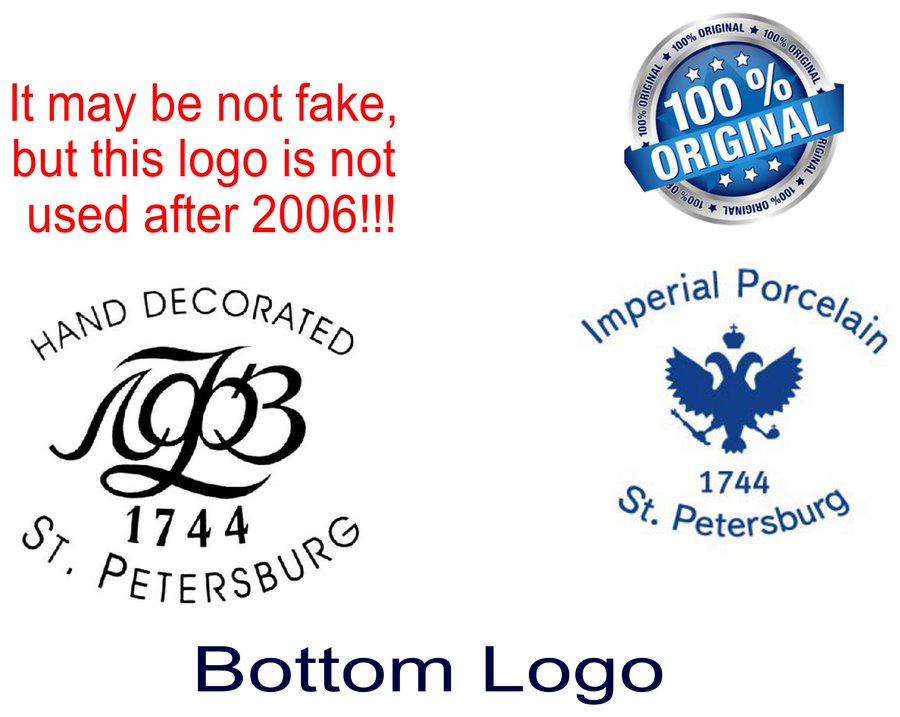
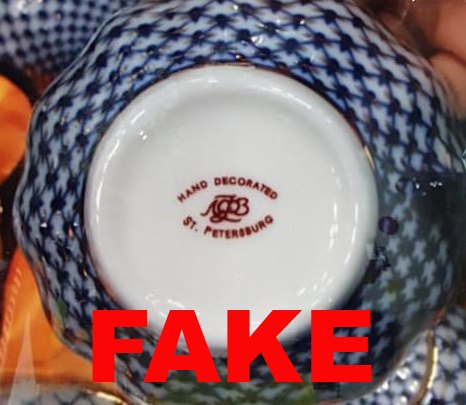
Turn the piece over. Every new piece from the Imperial Porcelain Manufactory carries the mark used since 2006: a double-headed eagle with the words “Imperial Porcelain”, the year 1744 and “St. Petersburg”.

2. Look closely at the pattern
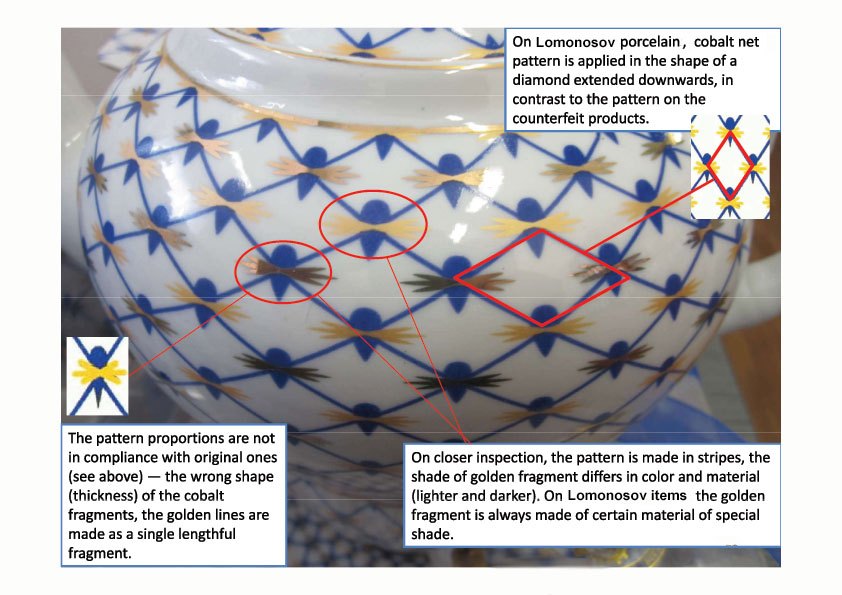
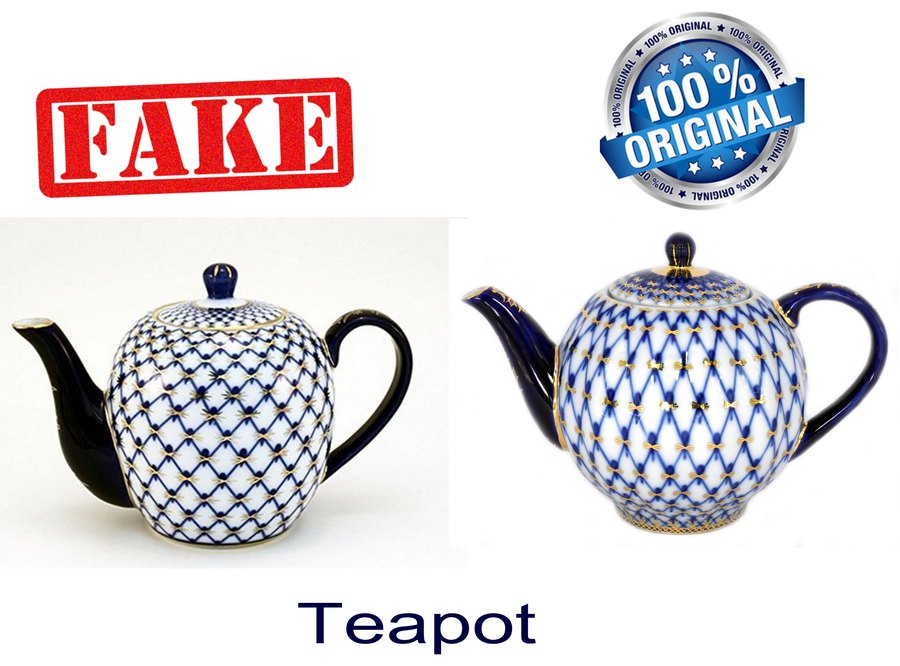
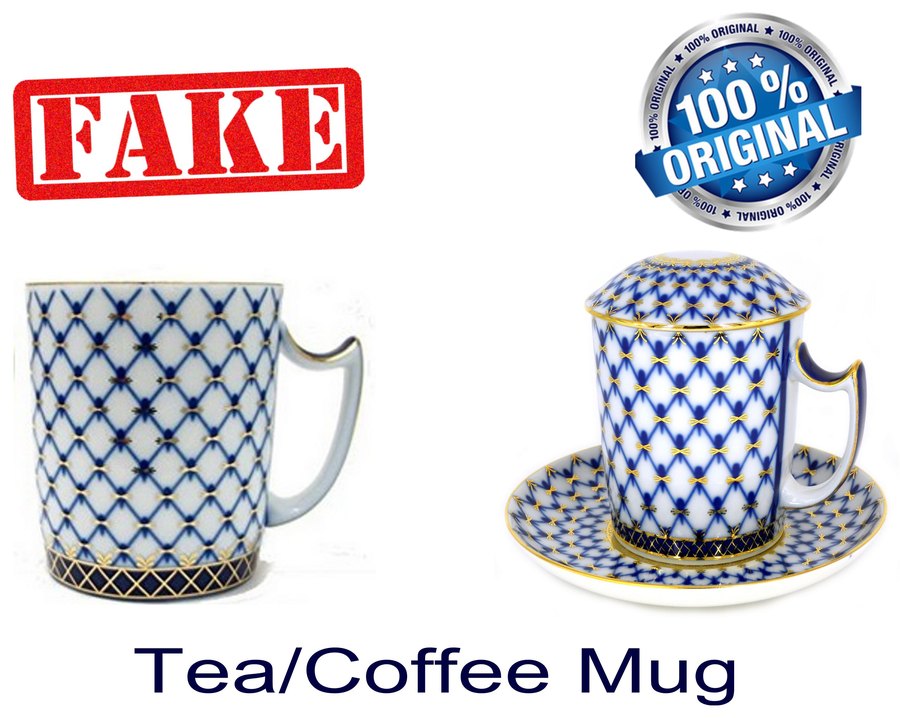
On genuine Cobalt Net the cobalt lines form diamonds that are stretched downwards. The gold accents are always made in one material of one particular shade.
On a fake the proportions give it away. The cobalt elements are the wrong thickness, the gold is drawn as a single long stroke, the net runs in stripes, and the gold varies from lighter to darker on the same piece.
3. Compare the colour
The manufactory fires its hard porcelain at 1400 °C (2552 °F). The copies we have examined are fired at about 1300 °C (2372 °F), and the result is visible: the cobalt blue of a fake is noticeably different from the deep blue of the original.
4. Compare the shape
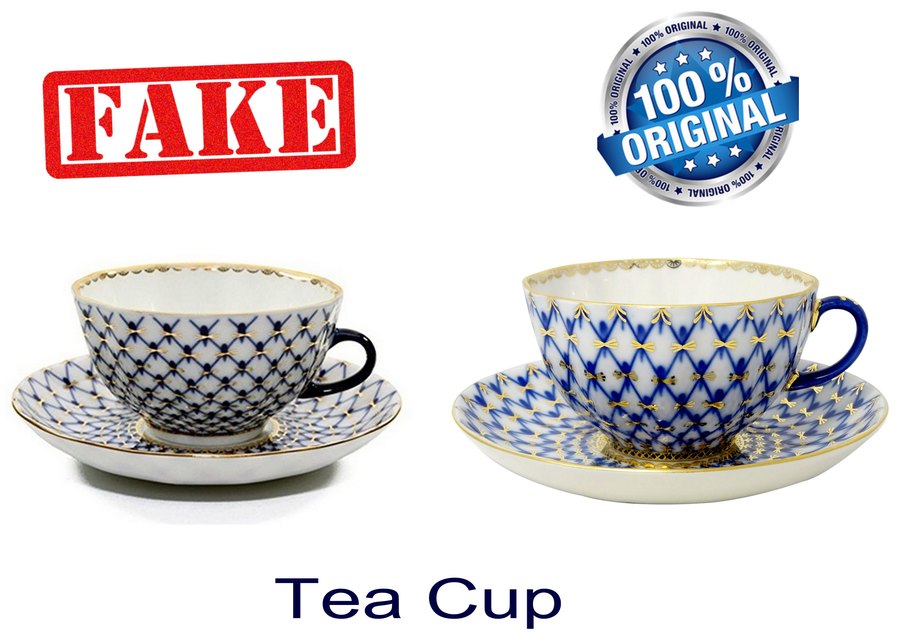
Counterfeiters copy the decoration, not the form. Put the listing photo next to the original and compare the silhouette, the handle, the spout, the foot and the gold rim. In each pair below the fake is on the left and the manufactory piece is on the right.
More pairs, from creamers to dinner plates, are in the Imitation Gallery.
5. Check the packaging
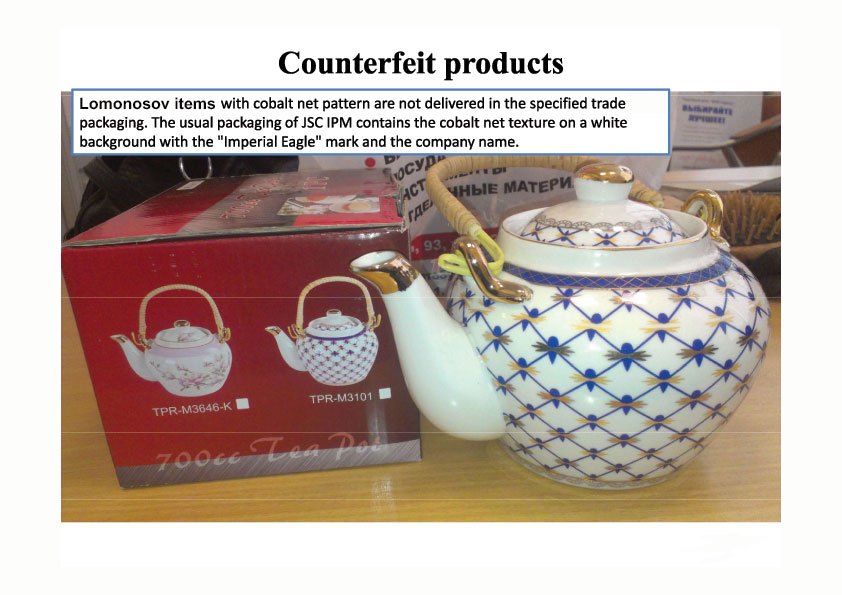
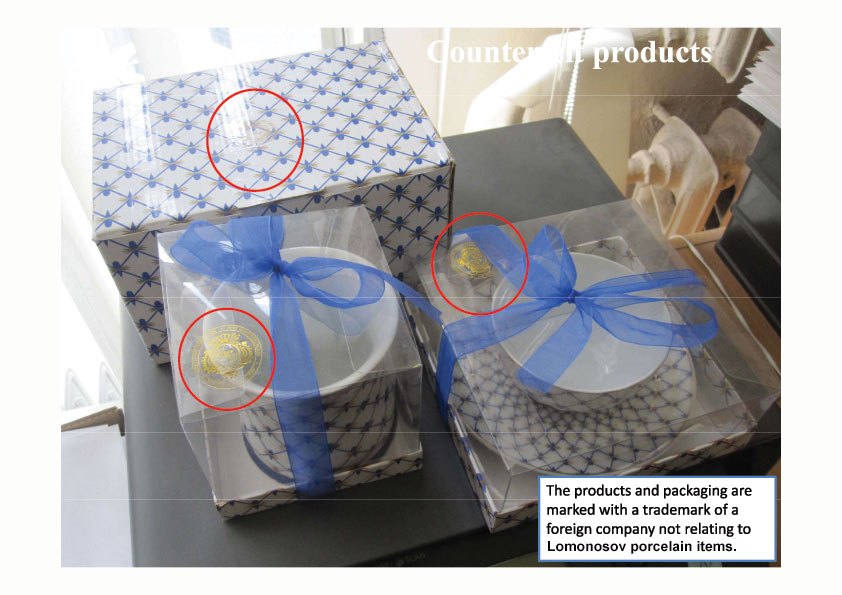
Genuine Cobalt Net comes in the manufactory's own packaging: the cobalt net design on a white background, with the Imperial eagle mark and the company name. A generic box with a model number, or packaging that carries another company's trademark, means the piece did not come from the manufactory.
6. Read the listing with care
- The title says “Lomonosov design” instead of naming the manufactory, the pattern and the shape.
- The seller's other listings are mostly unbranded imports.
- There is no photograph of the mark on the base, and the seller will not send one.
- The seller cannot show that the goods come from the manufactory.
Not sure? Send us a photo
If you have doubts about a piece you own or are about to buy elsewhere, email a photograph of the piece and of its backstamp to [email protected]. We will tell you whether it is an original.
Every porcelain piece in our Cobalt Net collection and in the rest of the catalogue comes from the Imperial Porcelain Manufactory in St. Petersburg.